
Clear Coat Repair: Causes, Process and When to Respray
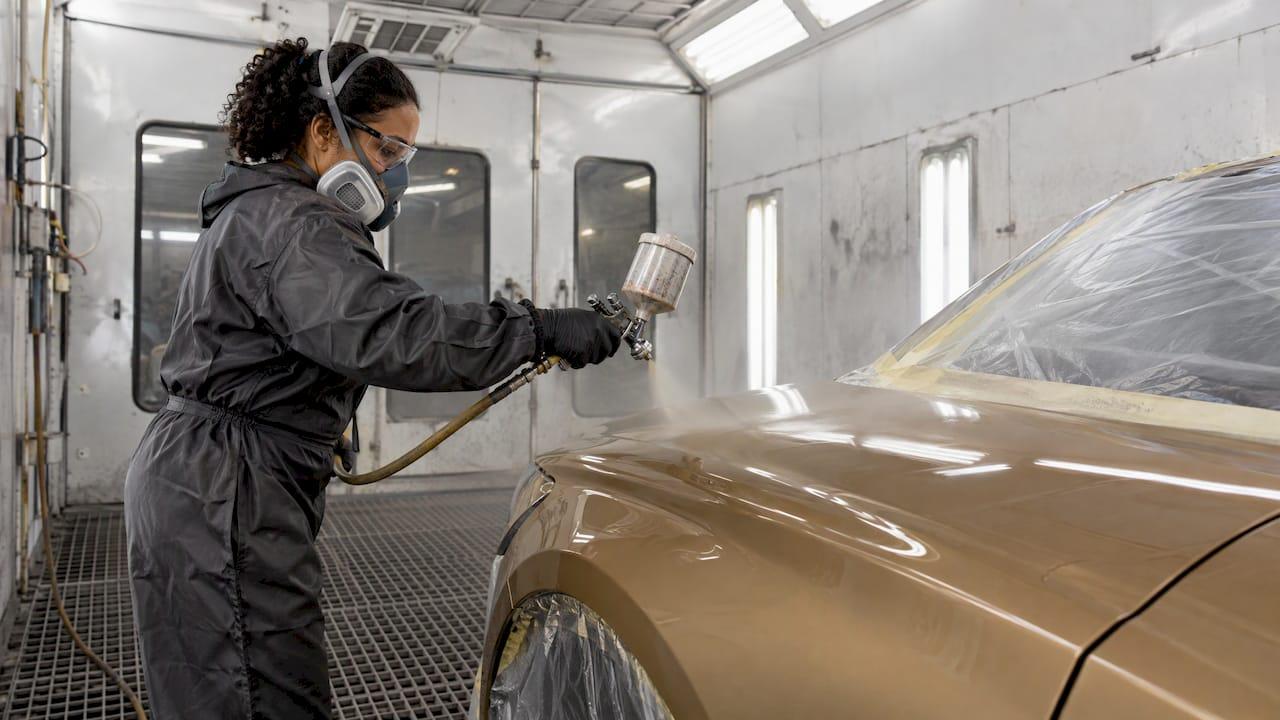
Clear Coat Repair: Causes, Process and When to Respray

If your clear coat is peeling, flaking or turning cloudy, the clear layer has lost its bond with the color coat underneath, and polishing will not put it back. Small stone chips can sometimes be touched up. Anything larger is properly fixed by sanding the affected area and refinishing it. At Leslie’s Auto Body in Fords, NJ, that is the work our auto painting and refinishing service is built around.
This guide explains why clear coat fails, how to tell which layer is damaged, what a lasting repair involves and what to do in the meantime.
TL;DR
-
Peeling clear coat is a bond failure between the clear and the color coat. Polish and wax cannot reattach it.
-
Causes include years of sun, moisture and pollutants, poor care, and application mistakes such as skipped drying time between coats.
-
A fingernail catch, or a scratch that still shows when wet, means the damage goes past the clear.
-
Tiny chips can be touched up. Larger damage needs sanding and a respray of the panel.
-
Keep buffers and aggressive polish off a failing spot, and get a free estimate before it spreads.
Table of Contents
What clear coat does and why it fails
Modern paint is a layered system: primer, a color (base) coat, and a clear coat on top. The clear coat gives the gloss and takes the abuse from sun, rain, road grime and car washes. According to I-CAR, the average basecoat/clearcoat surface is 4.0 to 6.0 mils thick, and the clear is only about 2.0 mils of that. That is a very thin layer protecting everything beneath it.
Peeling usually comes from one or more of these:
-
Weather and wear. AutoZone lists prolonged UV, moisture and airborne pollutants as common causes. Exposed paint can fade, oxidize and eventually peel.
-
Poor maintenance. The same source points to infrequent washing and abrasive cleaners.
-
Application problems. Sherwin-Williams Automotive Finishes lists poor sanding and cleaning, incompatible undercoats, wrong flash or recoat timing, and too much or too little film build among the causes of peeling.
-
Delamination. PPG defines this as the clear losing adhesion to the basecoat system, and ties it to excessive basecoat film build, too little basecoat flash time or incorrectly mixed clear.
Sun matters even before you see damage. A peer-reviewed weathering study found that outdoor exposure reduced the scratch resistance of clear coatings after just one month, because the surface layer changes chemically before bulk failure shows.
That is also why a previous paint job can fail early. Many failures that get blamed on “bad clear” actually start in preparation, compatibility, film thickness, flash time or spray setup, according to the Sherwin-Williams guide above.
How to tell which layer is damaged
Before anyone talks about a fix, you need to know how deep the problem goes. Three quick checks you can do in a driveway:
-
The fingernail test. Draw a nail lightly across the mark. If it catches, the damage likely goes beyond the clear coat, as this scratch-diagnosis guide explains.
-
The wet test. Wet the area. If a scratch disappears when wet and the finish looks glossy again, it is probably only in the clear. If it stays visible, it goes deeper.
-
Look for color. The same guide notes that visible car color, primer or bare metal means deeper damage.
Peeling looks different from scratching. If the clear is lifting at the edges, coming off in flakes, or you can see dull color coat underneath, the clear has separated from the base. Fine polishing cannot fix that.
Hazy, whitish or rough patches on a roof, hood or trunk lid are the typical early signs. Those are the surfaces that take the most direct sun.

Can peeling clear coat be fixed?
Yes, but how depends on size and depth.
Tiny chips. AutoZone notes that touch-up clear can work for very small repairs such as stone chips.
Anything bigger than a chip. The same source says respraying is the proper repair when damage is larger than a scratch or paint chip. PPG’s guidance for delamination is to sand the affected areas and refinish as needed.
The key point is that once the bond has failed in one spot, the surrounding clear is usually weakened too. Painting over the edge of a peeling patch tends to leave a ridge, and the peeling often continues around it. That is why a body shop will normally sand back to a sound edge and refinish the whole panel or a blended section, rather than patch just the flaked area.
What to avoid before your appointment
-
Don’t use a buffer or aggressive polish. A dime-sized peel can turn into a hand-sized bare patch in a single pass. Cutting compound on failing clear removes material that is already unbonded.
-
Don’t pick or peel at the edges. It feels satisfying and makes the repair area larger.
-
Limit sun exposure. Park in a garage or shade when you can. This can slow the spread while you wait for your repair.
-
Be careful with solvents. WD-40 says its Multi-Use Product is safe on painted metal when used as directed. On a panel where the clear is already lifting, though, it is better to leave the area alone and let a refinisher assess it, since any solvent can get under loose edges.
What a lasting clear coat repair involves
The order of the work matters more than any single product. Here is how a proper repair runs.

1. Assessment and film thickness
A refinisher looks at how far the failure extends, whether the color coat is still sound and whether the panel has been repainted before. Measuring paint thickness is part of that. I-CAR warns that removing too much clearcoat during repair can cause hazing, discoloration, peeling and finish failure, and it stresses monitoring film thickness throughout the repair and refinishing process.
2. Sanding back to a sound surface
Flaking and unbonded clear has to come off. The sanded area is feathered out so the edge of the repair does not show through the new finish.
3. Cleaning and priming where needed
Where sanding reaches primer or bare metal, those areas are sealed. Poor cleaning is one of the preparation errors the Sherwin-Williams guide lists as a cause of peeling, so this step is not a place to hurry.
4. Color matching and basecoat
If the color coat is damaged, it is rebuilt and matched to the rest of the car. Metallic and pearl finishes take more care here because the color has to blend across panels. Our auto painting and color matching work aims at factory-standard results.
5. Clear coat application
New clear goes on in controlled coats with the right flash time between them. Two-part automotive clear needs suitable spray equipment, ventilation and respiratory protection because of the isocyanates involved, which is one reason this stage belongs in a shop setting.
6. Cure, finish and detail
After curing, the panel is finished and the car is cleaned up so it goes home looking right. If you want a deeper clean afterward, see our detailing and finishing service.
Clear coat runs and sags are a different problem
Peeling and runs get mixed up in searches, but they have different causes. Sherwin-Williams describes runs as beads, droplets or curtain-like sagging, caused by too much wet material, low pressure, short flash time, incorrect gun setup or cold conditions.
For a cured run, its guide recommends block-sanding with 1200-grit or finer, then compounding and polishing. The area can instead be sanded smooth and refinished. So yes, runs can be fixed, and often with less work than a peeling panel, because the bond underneath is intact.
How long should clear coat last?
There is no single number. One practitioner source, HowToPaintCars.com, says a good factory paint job may last 10 years or more, with repaints averaging about 3 to 5 years for a spot job and 4 to 7 years for an overall repaint. Treat those as rough guides, not promises.
What shortens life in New Jersey is the usual list: summer sun, road salt in winter, tree sap, bird droppings left on the surface and cars parked outside all year. Regular washing, and keeping the car under cover where you can, helps.
What affects the cost of a clear coat repair
We do not publish set prices, because the only honest number comes from looking at the car. These are the factors that move an estimate:
-
How much of the panel is affected. A single flaking patch is a different job from a whole roof.
-
Number of panels. Peeling often shows up across the roof, hood and trunk together.
-
Paint type and color. Metallic, pearl and tri-coat finishes take more material and more blending.
-
Underlying damage. Dents, rust or earlier poor repairs have to be dealt with first.
-
Panel size. A hood costs more to refinish than a mirror cap.
An estimate is the way to get a real figure. Ours are free and do not obligate you to anything or start an insurance claim.
Does insurance cover peeling clear coat?
It depends on your policy and the cause. Clear coat that fails from age and sun exposure is generally a wear issue, which is a different category from damage caused by a collision, vandalism or another covered event. Your insurer decides coverage, and your policy language is the place to look. If the damage came from an accident, we can assist with the claim paperwork through our insurance claim assistance service, for customers of any major carrier.
We are an independent shop. We are not a direct repair shop for any insurer and we are not partnered with, preferred by or approved by any carrier, so the repair plan is built around your car.
Our perspective
Most clear coat that comes into a shop was a small spot at some point. A flake on the roof, a hazy patch on the hood. People wait because it looks cosmetic, and then the buffer, the pressure washer or a hot summer turns it into a whole panel.
We do not think the answer is to rush a quick spray over the damage. A repair lasts when the failed layer is taken back to something sound, the color is matched properly and the clear goes on with the right prep and timing. That is slower than a cover-up, and it is the part that keeps the finish from peeling again.
We are independent on purpose. We are not tied to an insurer’s network, so when we tell you a panel needs refinishing, it is because the paint needs it. We look at the car, explain what we see in plain language and give you a free estimate with no obligation.
Robert De La Cruz
Get your paint looked at
If your clear coat is flaking, hazy or lifting at the edges, the earlier someone looks at it, the smaller the repair tends to be. Bring the car to our shop at 908 King Georges Post Rd in Fords, and we will tell you which layer is damaged and what a lasting fix involves. We see drivers from Woodbridge Township, Edison, Metuchen and Perth Amboy, so the shop is close whether you are coming from Perth Amboy or elsewhere nearby.

If the paint damage comes with dents, a cracked bumper or crash damage, our collision repair team can handle the body work and refinishing together, so the panel is finished once. Start at our Fords auto body shop page to request a free estimate.
FAQ
Can I just add another layer of clear over faded or peeling clear coat?
Only if the clear underneath is still firmly bonded, and with peeling it is not. New clear sprayed over a loose layer will lift with it. The usual fix is to sand the damaged clear back to a sound edge and refinish the panel.
Does polishing fix peeling clear coat?
No. Polishing can restore gloss to oxidized clear that is still attached. Once the clear has separated from the base coat and is flaking, there is nothing left to polish, and a buffer can make the bare patch bigger.
Does WD-40 remove clear coat?
WD-40 states that its Multi-Use Product will not harm paint when used as directed on painted metal. It will not repair peeling either, and it is best kept off any area where the clear is already lifting. A refinisher can tell you what the panel needs.
Can clear coat runs be fixed?
Yes. A cured run can be block-sanded with fine paper, then compounded and polished, or sanded smooth and refinished. Runs are a spraying defect, so the bond underneath is usually fine, unlike peeling.
How do I know whether I need a respray or just a touch-up?
A tiny stone chip may take touch-up. If the damage is bigger than a chip, if your nail catches, or if color or primer shows, plan on refinishing. A free estimate will confirm which one your car needs.
Sources
-
Degradation of scratch resistance of clear coatings (ScienceDirect)
-
HowToPaintCars.com: Diagnose and cure early clear coat failure