
Auto Body Repair Estimate: What It Includes and What to Do Next
Auto Body Repair Estimate: What It Includes and What to Do Next

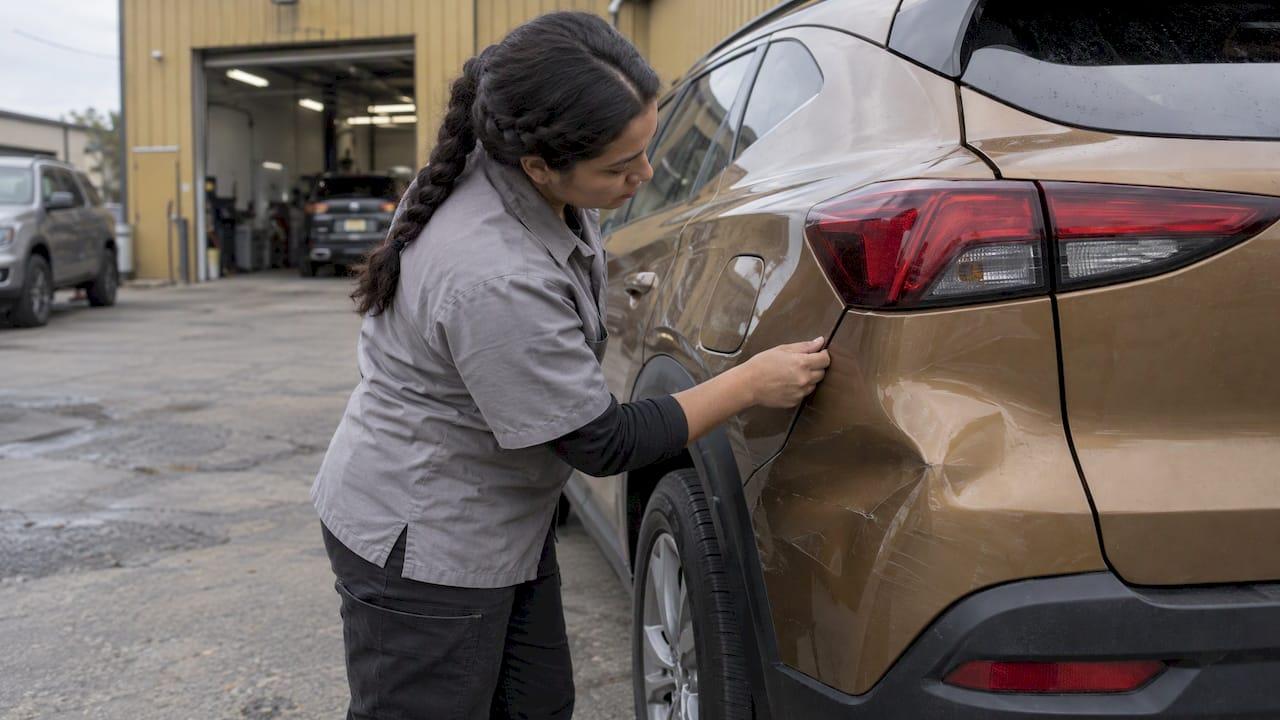
A good auto body repair estimate is a written, itemized plan for the damage you can see: parts, labor hours, labor rate, paint and materials. It is not a final bill, and it is not an insurance decision. You can get one before you call your insurer, and in New Jersey you decide which licensed shop does the work. At Leslie’s Auto Body in Fords, estimates are free and carry no obligation, and getting one does not start a claim.
Below: what belongs on the estimate, why the number can move, how to deal with a low insurer figure, and what to do in the first days after a hit.
TL;DR
- An estimate covers visible damage. Hidden damage found once panels come off is added later as a supplement, which needs approval before work continues.
- New Jersey law requires a licensed body shop to give you a written, itemized estimate if it is willing and able to do the repair.
- You may use any licensed shop. Your insurer cannot deny that choice, though your shop must accept the insurer’s terms or you may owe the price difference.
- If an insurer’s number looks low, ask in writing how it was calculated and bring a second, itemized estimate.
- At Leslie’s, estimates are free, with no obligation and no claim required.
Table of Contents
- What an auto body repair estimate actually is
- What New Jersey requires on a written estimate
- What goes into the price
- Photo estimate or in-person look
- Why the final bill can differ from the estimate
- Before or after you call your insurer?
- Your right to choose the shop in New Jersey
- When the insurer’s estimate looks low
- Different damage, different estimate
- What to bring and what to expect
- Get an estimate in Fords
- FAQ
- Sources
What an auto body repair estimate actually is
An estimate is a breakdown of what needs to be repaired and what it will cost to restore the vehicle, usually listing parts, labor rates and estimated repair time based on the damage that can be seen. Progressive’s repair-estimate FAQ describes it this way, and notes that if more damage turns up during repairs, an updated estimate follows.
Three things it is not:
- Not a final invoice. Bumper covers hide cracked brackets, and crumpled fenders hide bent supports. The estimate is the best reading of the car before it is taken apart.
- Not a coverage decision. A shop’s estimate says what repairs should cost. Whether your policy pays, and how much, is decided by your insurer.
- Not permission to start. Work begins when you authorize it, typically by signing the estimate.
The same words, “collision repair estimate,” “body shop quote” and “auto collision estimate,” all describe this one document.
What New Jersey requires on a written estimate
In New Jersey a licensed auto body repair facility must give a written estimate to any customer seeking its services, as long as it is willing and able to do the work. Under N.J.A.C. 13:21-21.10, the estimate has to show:
- the shop’s name and license number, and the signature of the person who wrote it
- your name and the date
- each part and its cost, with any part that is not new identified
- the labor charge for each repair, or total hours plus the hourly rate
- a description of the vehicle
- an estimated delivery date, if one is given
- the guarantee terms and their limits, and the odometer reading
The state’s Guide to Auto Repair adds that the Consumer Fraud Act requires changes to an estimate to be approved by the customer before the work is done.
A practical reading test: if the estimate says only “front end repair, $3,000,” it is not what the regulation describes. You should be able to see which parts are new, which are not, how many hours go to each panel, and what the shop charges per hour. Those lines are also what you will need if you ever have to compare against an insurer’s number.
What goes into the price
Every estimate comes down to the same four components.

Parts. Bumper covers, fenders, headlights, sensors and brackets. Newer vehicles have more of them, and more expensive ones. The estimate should say which parts are new and which are not.
Labor. Hours to remove, repair or replace, and refit each panel, multiplied by the shop’s hourly rate. Structural work and anything that needs disassembly of interior or electronic components takes the most time.
Paint and materials. Refinishing a panel means preparation, primer, base color, clear coat and curing. A bumper cover repainted on its own is a smaller job than a door that must be blended into the quarter panel beside it.
Scans and calibrations. Cars with cameras, radar and parking sensors often need electronic checks or calibration after a repair. Travelers lists scans and electronic calibrations among the common reasons a supplement is added after the first estimate.
Two cars with a similar-looking dent can have very different estimates because of these four lines. That is why a number quoted over the phone, with no look at the car, is a guess.
Photo estimate or in-person look
Photos work for clear, outward damage on an identifiable vehicle: a scraped corner, a dented door skin. If you are standing in a parking lot in Perth Amboy after a hit, taking photos from several angles and of the VIN plate is a useful first step.
In person is better when the damage may go deeper than the paint: a bumper pushed in, a wheel turned, a door that no longer closes, or anything that happened at speed. A technician can see gaps between panels, check how the car sits, and look underneath. Even insurers’ own photo tools are optional. NJM, for example, says its photo estimating app is available on request through the adjuster, and that the estimate is still part of a claim process with an inspection.
Whatever you do, do not crawl under a damaged car or touch exposed wiring to get a better photo. If the car is leaking fluid, a wheel is bent or a warning light is on, have it looked at in person.
Why the final bill can differ from the estimate
After the estimate is agreed, the car is disassembled. This is when hidden damage shows: a crushed absorber behind the bumper cover, a cracked mount, a bent reinforcement. The shop writes a supplement, an add-on estimate for the newly found parts and labor. When there is a claim, the insurer reviews it and, where appropriate, pays the shop directly, according to Travelers’ guide to understanding your estimate. Supplements can also reflect part price changes, repair hours and labor rates.
Two rules keep this fair to you:
- The supplement should be itemized the same way as the original estimate.
- You approve it before the added work is done. In New Jersey, changes to the estimate need the customer’s approval, per the state’s consumer guide.
When the damage is on the front or rear of a car, a small-looking bumper hit is the usual source of surprises. That is one reason to ask a shop, at the estimate, what it expects it may find behind the visible damage. A shop that explains this up front is telling you how the job will actually run.
Small paint chips are a separate matter from supplements, but they show how color matters in a repair: touch-up work depends on paint mixed to the vehicle’s original color code, the same reason a shop matches the paint on a repaired panel to the rest of the car rather than just “close enough.”
Before or after you call your insurer?
You can get a shop estimate first. NJM states that you may have a shop prepare an estimate before filing a claim, but the insurer must inspect the damage before repairs are made, and if you already have an estimate you should give the adjuster a copy (NJM auto estimates FAQ).
That makes the order simple for a minor hit, like a bumper scrape in a parking lot:
- Photograph the damage and the scene.
- Get a written estimate so you know what the repair costs.
- Compare it with your deductible, the amount on your policy that you pay before collision coverage does.
- Decide whether a claim makes sense, and if it does, give the adjuster the estimate.
If the estimate is close to your deductible, you may prefer to pay out of pocket. If the hit was larger, or another driver was involved, tell your insurer promptly. At Leslie’s Auto Body, the estimate is free, with no obligation, and does not start a claim, so you can get the number first.
Your right to choose the shop in New Jersey
Many drivers are handed a “preferred shop” by the insurer. You do not have to use it. The New Jersey Department of Banking and Insurance says that, as long as the shop is licensed, you can choose your own repair shop, and the insurer must try to reach an agreed price with that shop. Under N.J.A.C. 11:3-10.3, the insurer may recommend a qualified shop but cannot refuse the one you picked.
There is a condition. Under N.J.S.A. 17:33B-36.1, the shop you choose must accept the same terms and conditions, including price, as the insurer’s most generously arranged shop. Before repairs, the shop must give you a written notice that accepting those terms may put a manufacturer or dealer warranty or a lease agreement at risk, and you must sign it. The Appellate Division, in Mikhail v. NJM (2024), confirmed that you can still use a shop that does not agree to the insurer’s rates, but you would pay the difference between the insurer’s reasonable price and the shop’s price.
In plain terms: the choice is yours, and the shop’s price and the insurer’s number are then worked out between them. Leslie’s Auto Body is an independent shop. It is not a direct repair shop for any insurer, so the repair decisions are made for the customer and not for an insurance company.
When the insurer’s estimate looks low
A low or confusing insurer estimate is common enough to have a routine:
- Ask how it was calculated. Consumer Reports advises asking the adjuster in writing how the estimate was calculated and why certain items are not covered (Consumer Reports).
- Get another itemized estimate from a shop you choose. Compare line by line: parts, hours, rate, paint, scans.
- Keep a written record of every message and call.
- Know the clock. New Jersey rules say an insurer that intends to inspect a vehicle available for inspection must do so within seven working days after notice of loss, and must send a detailed written estimate specifying deductions (N.J.A.C. 11:3-10).
- Escalate if needed. Consumer Reports notes you can file a complaint with your state’s Department of Insurance.
If you pay out of pocket for part of the job, or the claim is large, our insurance claim assistance is personal help with claims from major carriers, and repairs include documentation for insurance.
If you drive a lease or have a loan, check with the lienholder: repairing is usually your choice, but a lender or lessor can set repair requirements, as Progressive notes.
Different damage, different estimate
A scratch or faded paint. This is a paint estimate, not a collision one. The questions are how many panels, whether the clear coat has failed, and whether adjacent panels need blending to match. See our auto painting and refinishing service for what the work covers.
A dented bumper or door. Often the quickest to estimate, and photos can give a first idea. Dent and bumper repair is done at our Fords shop.
A hard hit. If doors do not line up, the car pulls, or there is damage near the frame rails, the estimate needs a hands-on look, and a measurement of the structure. Frame damage is not automatically a total loss. Whether a car is declared one is the insurer’s valuation decision, weighing repair cost against the car’s value. Our frame and structural repair page explains what that work involves.
Anything that could affect resale. Poor color match and uneven panel gaps show. Our repairs are matched to factory standards and finished before the car goes home, and each job is detailed.
What to bring and what to expect
Bring the car, your insurance card, and your policy number if you have a claim. If you have the police report, the other driver’s information, or photos from the scene, bring those too. Write down the odometer reading; it belongs on the estimate.
Ask the person writing the estimate to walk you through each line, to tell you what may turn up once the car is apart, and to explain how a supplement would be handled with you. Check that the document has the shop’s name and license number and itemizes parts and labor as the regulation lists.
The San Diego page ranking for this term quotes 15 to 45 minutes for an in-person estimate, but the time depends on the damage and the vehicle; a bumper scrape is quick, a structural job takes longer. Repair time is set after teardown, when the parts needed are known. Ask for the estimated delivery date to be written on the estimate; the regulation lists it when one is given.
Our view: the estimate should work for you
The number on an estimate matters less than who wrote it and whom they were working for. A shop that has agreed to an insurer’s pricing program has one set of pressures. We chose not to become a direct repair shop, because that would mean working at the mercy of the insurance company.
So we write the estimate around the car: what the damage is, what a proper repair takes, and what the insurance paperwork will need. We help customers with claims from all major carriers, we are not partnered with any of them, and we do not ask you to start a claim to get an estimate.
Our advice to any driver in Fords, Woodbridge, Edison, Perth Amboy or Metuchen is the same: get the estimate itemized, understand what could change, and choose the shop yourself.
Robert De La Cruz
Get an estimate in Fords
Leslie’s Auto Body is an independent collision repair shop at 908 King Georges Post Rd in Fords, NJ, and has operated under the same name for more than 40 years. We handle collision repair, painting, frame work, dent and bumper repair, detailing and claim assistance in one shop. Estimates are free, without obligation, and do not start a claim.

Bring the car in, or start from our Fords shop page, and we will go through the estimate with you line by line. Drivers nearby can also see our pages for Perth Amboy, Metuchen and Avenel.
FAQ
Is a body shop estimate free in New Jersey?
It can be. The state rule says a shop that charges a fee for a written estimate must disclose the amount in writing before preparing it (N.J.A.C. 13:21-21.10). Our estimates at Leslie’s are free and carry no obligation.
Does an estimate lock in the final price?
No. It covers visible damage. If hidden damage is found, the shop writes a supplement, and in New Jersey changes to the estimate need your approval before the work is done.
Do I have to use the shop my insurer recommends?
No. You can choose any licensed shop, and the insurer must try to agree a price with it. The shop must accept the insurer’s most generous terms, and you sign a written notice about possible warranty or lease effects before repairs.
Should I get an estimate before filing a claim?
You can. The insurer must still inspect the damage before repairs are made, so give the adjuster your estimate when you file.
Sources
- Progressive: Car Repair Estimates FAQ
- N.J.A.C. 13:21-21.10, Estimates and repairs
- NJ Division of Consumer Affairs, Guide to Auto Repair
- Travelers: Understanding Your Auto Estimate
- NJM: Auto Estimates and Repairs
- NJ Department of Banking and Insurance: Filing an Auto Damage Claim
- N.J.A.C. Title 11, Chapter 3, Subchapter 10
- N.J.S.A. 17:33B-36.1
- Mikhail v. NJM, A-1137-22 (2024)
- Consumer Reports: How to File a Car Insurance Claim
- Touch-up paint matched to the original color code